You notice a crack above a window. Outside, a mature tree stands beside the house. It is tempting to join those two observations into a diagnosis—and arrange removal. Before choosing work, ask what evidence connects the tree, the ground and the building.
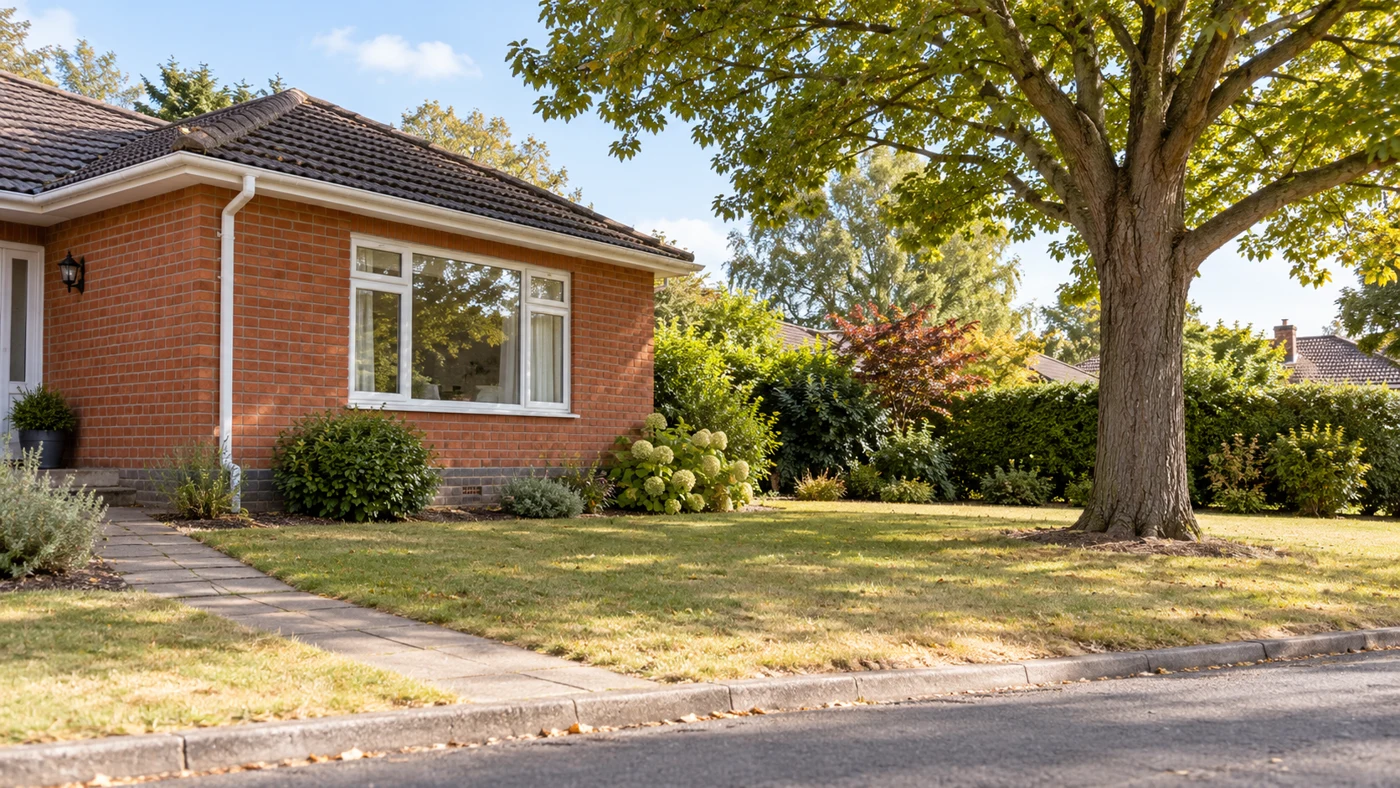
This guide helps homeowners and buyers prepare that conversation. It is general education, not an assessment of a particular tree or structure. The episode uses fictional illustrations and exaggerated conceptual animations.
Watch the full episode
Separate three different problems
A root in contact with a paving slab, roots entering a defective drain, and moisture-related movement beneath a foundation are different mechanisms. Evidence about one does not automatically establish another. The Royal Horticultural Society explains these distinctions, including the importance of shrinkable clay when trees contribute to drying beneath foundations.
Put the observation in the correct column before discussing a remedy:
| Observation | A useful investigation question |
|---|---|
| Raised paving beside a root | What is happening at this local contact, and what separate evidence exists about the building? |
| A suspected drain problem | What is the condition of the pipe, and where is any leakage going? |
| A crack in a wall | What changed, what other symptoms exist, and what explains the building response? |
The ground is the missing link
Some clay-rich soils lose volume as they dry and gain volume when moisture increases. The amount depends on the soil and its conditions. Different movement beneath different parts of a building can affect the structure. A cracked garden surface alone does not quantify movement beneath a footing.
Rainfall and vegetation are only part of the moisture picture. Leaks, drainage changes and landscaping can also matter. The British Geological Survey describes these influences on shrink and swell. Use that mechanism to frame questions, not to assign a cause from a photograph.
Removal changes the system
Tree removal changes water uptake. Where vegetation has dried expansive foundation soils, subsequent moisture recovery can allow swelling and upward movement, or heave. This is a condition to assess, not an inevitable result of removal. USGS Professional Paper 1240-B discusses vegetation removal and expansive soils.
Before accepting a proposal, ask the adviser to explain its intended effect and the evidence behind it. Does the work address a suspected cause, existing damage, or both? What alternatives were considered? What observations would show that the original explanation needs revision?
Root cutting also needs planning
A trench can cross roots beyond the visible canopy. The International Society of Arboriculture recommends involving an arborist when planning construction around trees. Ask how tree protection, excavation and access will be coordinated before work starts.
A green canopy immediately after construction does not establish that roots escaped harm. University of Maryland Extension explains that root-damage symptoms may take months or years to develop. Keep construction and tree-work dates in the property history.
Build a record that another person can use
From safely accessible places, record the date and location of your observation. Photograph the surrounding wall and then the feature. Use a consistent viewpoint for later photographs. Note other changes, such as a sticking door, a repaired leak or altered drainage. Mark uncertain dates as unknown.
Separate discovery from onset. A crack first noticed after a dry summer might have existed earlier. A dated photograph is stronger evidence about timing than a plausible story remembered afterward. Keep original reports and photographs alongside your notes so a professional can review the context.
For a property purchase, request available investigation, monitoring and repair records. Ask which recommendations were carried out and what remains unresolved. For planned work, make sure the proposal identifies what evidence is still missing and who will resolve it.
Take three questions to the right professionals
- What evidence connects this tree to this problem?
- What other explanations have been considered?
- How will the proposed change affect the ground, building and tree?
A qualified building professional can assess the structural significance of the cracking; an arborist can assess the tree and the consequences of proposed work. Where soil movement is suspected, ask how geotechnical findings will be integrated into the recommendation. Check applicable local requirements before committing to tree work.
Keep clear of visibly unstable trees or structures and seek urgent local help when safety is in question. Do not treat a new crack as a reason to flood the ground beside a wall or cut roots as an experiment.
Use the Beneath the Property field-notes worksheet to organize observations. For the wider context, watch Cracks in Your Walls? Check These 3 Clues Before Repairing.