A puddle on the basement floor tells you where water collected. It may tell you much less about where the water entered. Before choosing a waterproofing or drainage repair, build a short record around three questions: When did it appear? Where was it first wet? What is outside that part of the wall?
These observations help a qualified building professional investigate the cause. They are a starting point for a conversation, rather than a diagnosis or a repair specification.
Start with safe access
If the space is flooded, stay out until electrical, structural and contamination hazards have been assessed. Do not enter water to reach a breaker, plug in a pump or photograph a wall. CDC guidance says to call an electrician if standing water prevents safe access to the main power switch. Floodwater can also contain sewage and other contamination.
The examples below assume an observation from a safe, dry location. A photo is never worth entering an unsafe room.
Clue 1: Record the timing
Write down when you first noticed moisture and what was happening around that time. Include rain, snowmelt and indoor water use. Was a washing machine running? Did the patch appear during the storm, or hours afterward? Record what you actually know; “first noticed at 7 p.m.” is more precise than assuming that the leak began then.
A recurring pattern can focus the investigation. It does not establish the hidden route. Water in the ground can remain after the weather improves, so a dry afternoon alone cannot rule out a ground-related source.
Clue 2: Photograph the first visible wet area
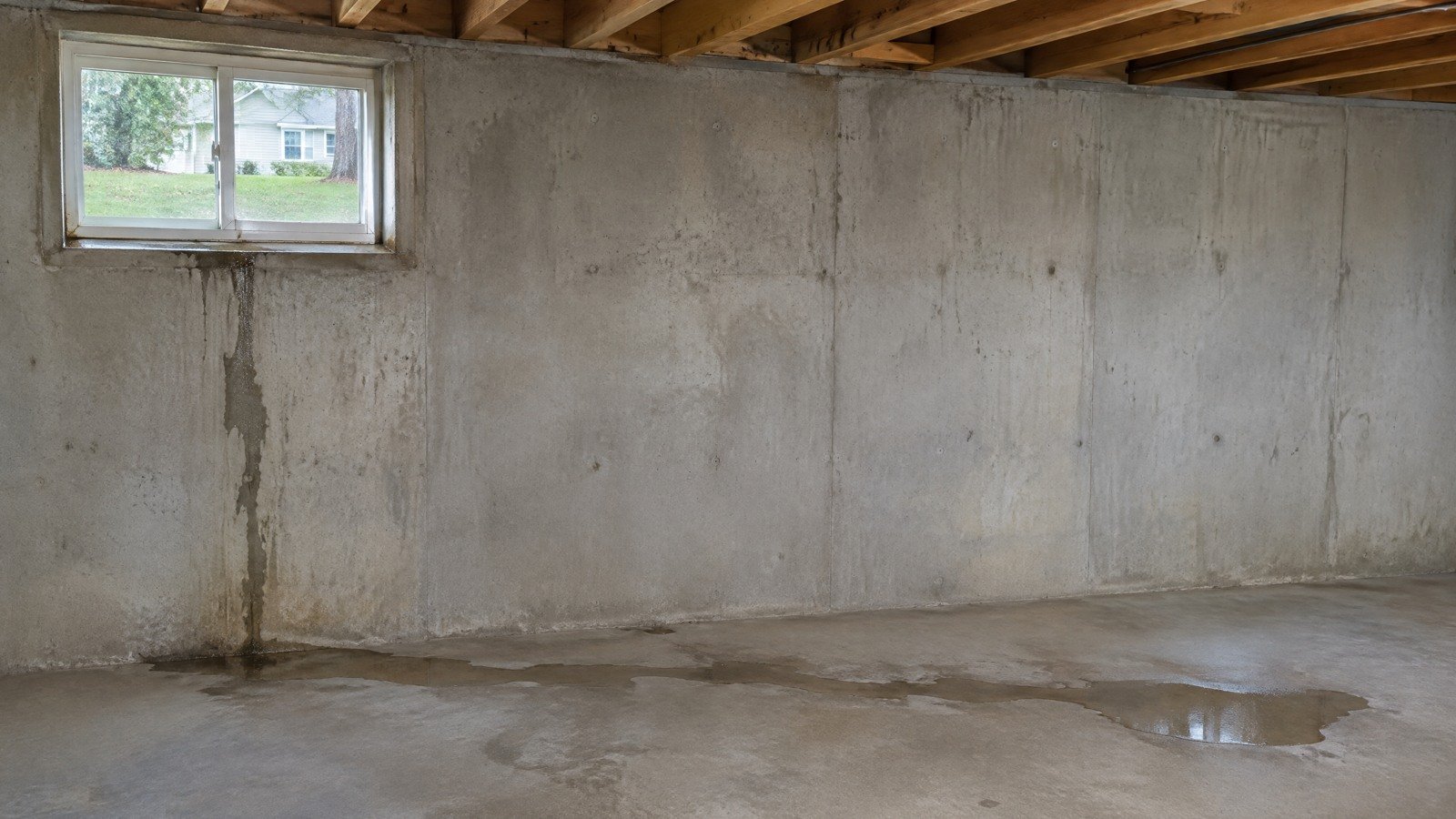
From safe access, take a wide image that includes the wall, floor, windows and nearby plumbing. Add a closer image if it is safe to do so. In our fictional example, a damp trail begins below the window and leads toward a low spot. The largest puddle is some distance from the window.
That pattern is useful evidence to bring to an investigator. Water may travel along surfaces or behind finishes, however, and a photograph cannot show every concealed connection.
Clue 3: Connect the indoor location with the outside
Look at the same part of the wall from safe ground outdoors. Is a downspout discharging nearby? Is there a depression that collects runoff? Does a window well sit below surrounding ground? Record the relationship rather than climbing into the well or carrying out an improvised water test.
University of Minnesota Extension discusses roof drainage, ground slope and window wells among the conditions to consider when investigating basement moisture. A cover is one component; drainage, window details, surrounding grade and maintenance also matter.
A wet pipe and a wet wall may need different solutions
Condensation forms when moist air encounters a sufficiently cold surface. An intact cold-water pipe can therefore be wet on the outside. Leakage at a joint is a different possibility, and more than one source may exist at the same property. Record the location and timing of droplets and have uncertain plumbing assessed.
A dehumidifier removes moisture from the air. It does not fix a leaking pipe or intercept liquid water entering through a window. Similarly, repainting can improve appearance without resolving the moisture source. PNNL’s assessment guidance emphasizes identifying and correcting water problems before retrofit work proceeds.
An observation table to copy
| What to record | Example wording |
|---|---|
| Time first noticed | Sunday, 7 p.m.; actual start time unknown |
| Conditions | Rain earlier in the day; washing machine was off |
| First visible wet location | Damp area below the north basement window |
| Wider context | Photo includes window, wall and floor trail |
| Corresponding outside area | Window well and nearby downspout visible from the path |
| Follow-up | Professional assessment requested; no cause assigned yet |
The example is fictional. Keep dates, images and repair records together so the next person can follow the same evidence.
Three questions before accepting a repair proposal
- What evidence supports the proposed source? Ask the professional to connect the findings to the explanation.
- How will this work interrupt the water or moisture route? Understand which problem each part of the proposal addresses.
- What maintenance and follow-up are required? If drainage is involved, establish where the discharge will go and what local requirements apply.
For buyers and agents, a dry viewing day is only a snapshot. Ask about previous water entry, the conditions when it occurred, repairs and maintenance records. Keep an observation such as “wet below the window after rain” separate from an unverified conclusion such as “failed waterproofing.”
For a related walkthrough, read our roof-water and home-flooding guide. Different routes require different responses; understanding the source is the useful first step.
Sources and visual context
- University of Minnesota Extension: Moisture in basements
- PNNL: Pre-retrofit assessment of crawlspaces and basements
- U.S. Department of Energy: Insulation guide
- CDC: Reentering your flooded home
- EPA: Flooded home guidance
Reviewed November 13, 2026. Article by Beneath the Property, an independent educational brand. Illustrations and clips were newly generated for this fictional example; diagrams are simplified and not to scale. Video narration uses Steven / ElevenLabs Eleven v4. This page provides general education and does not diagnose a pictured property or replace a site-specific assessment.